
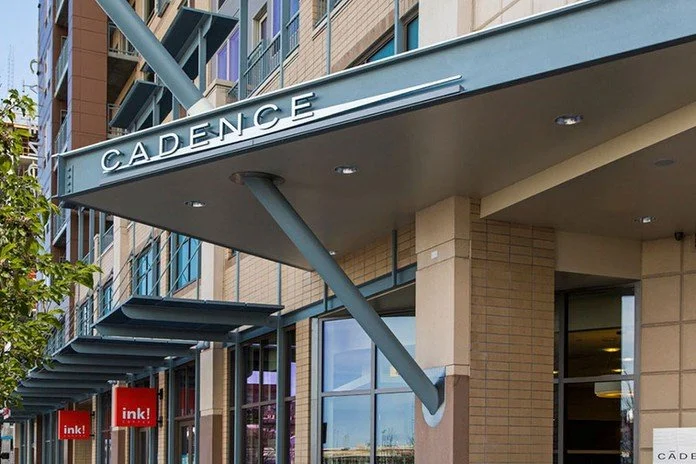
Cadence
Retail Infrastructure & Curation · Union Station Neighborhood · Denver
THE ASSIGNMENT
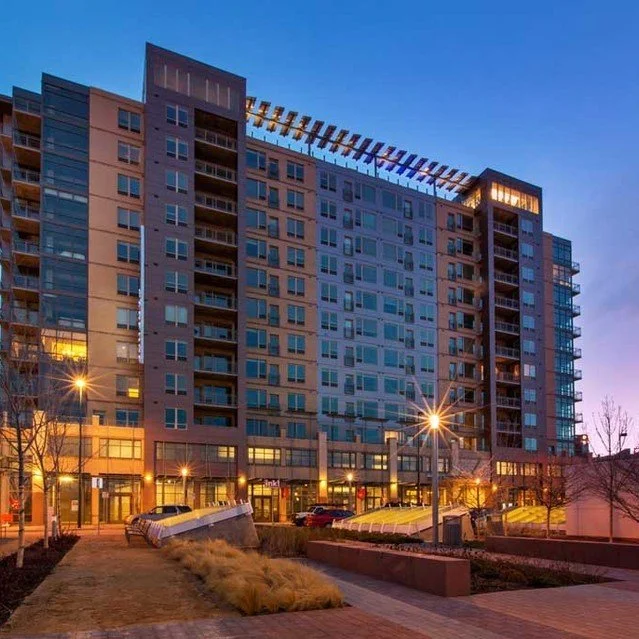
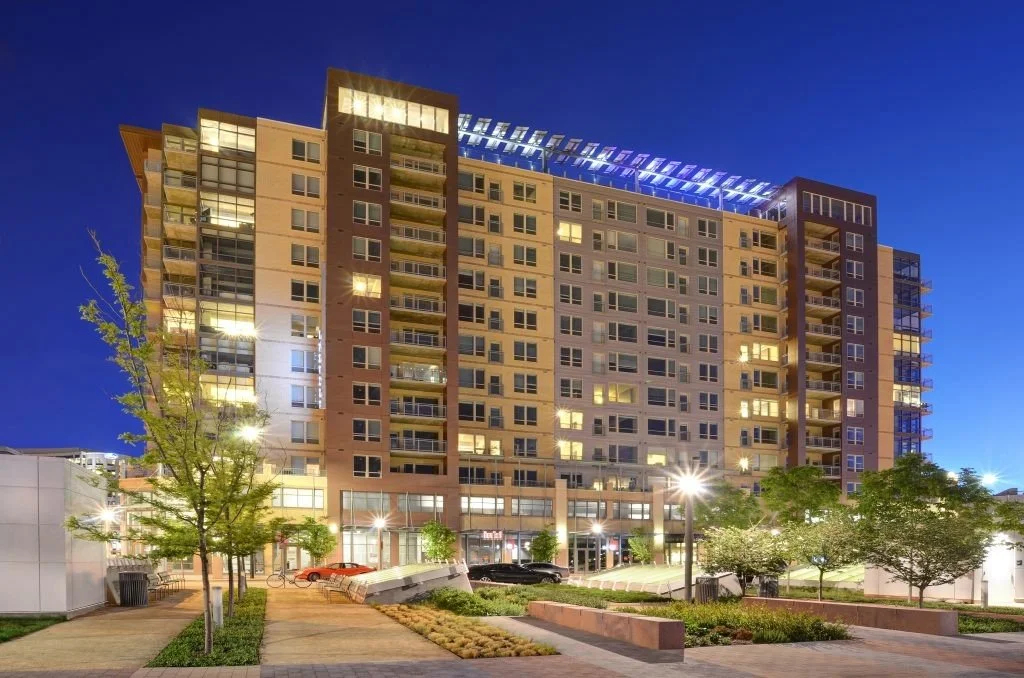
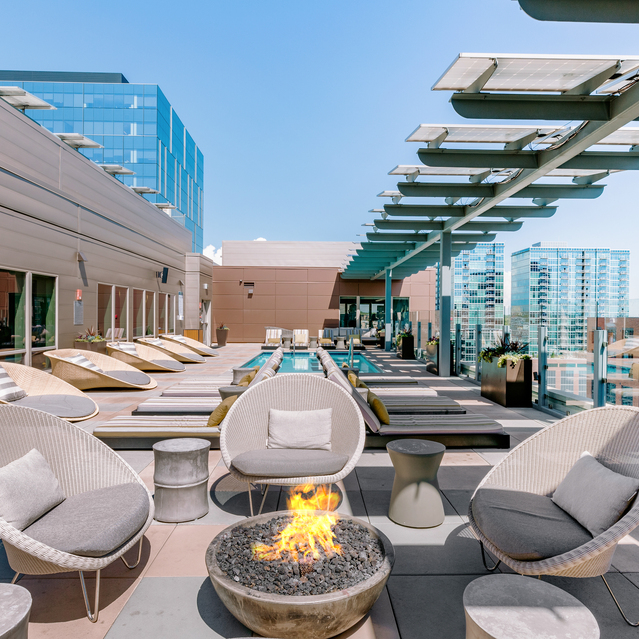
Cadence is a 13-story, 219-unit LEED Gold mixed-use development at 17th and Chestnut in Denver's Union Station neighborhood — Zocalo Community Development's third LEED Gold high-rise, capitalized in partnership with Principal Financial Group. Less than 100 feet from two commuter rail lines, in the middle of what was becoming the densest transit-oriented development in the Rocky Mountain West.
It was our second engagement with Zocalo, following 2020 Lawrence. But it was the first time we were engaged before construction started. That distinction matters, because it changed what the assignment actually was.
We weren't hired to lease four completed retail spaces. We were hired to help decide what those four spaces should be, how they should be engineered, and what infrastructure would preserve options for whoever would occupy them years later.
THE COMPLICATION
The retail program at Cadence had to accomplish two things simultaneously that don't always align.
First, it needed to serve the residents of a luxury LEED Gold high-rise — sophisticated urban consumers who chose Union Station for walkability, sustainability, and daily-use amenities within reach.
Second, it needed to activate corners that thousands of commuters, transit riders, and visitors from across the region would pass every day. What worked for residents wasn't automatically what worked for foot traffic — and the visibility of the site was too significant to waste.
The harder complication was that these decisions had to be made before a single tenant was identified. Every infrastructure choice made during design — HVAC capacity, plumbing distribution, venting, electrical service — would either expand or narrow the pool of tenants who could ever occupy those spaces. Wrong decisions in 2013 would still be limiting the property in 2020.
THE APPROACH
Engineered for four restaurants, not four tenants
The central infrastructure decision was to engineer all four retail spaces for restaurant use from day one — not because we knew all four would be restaurants, but because engineering for restaurant use preserved every option.
Hood runs were routed through the top of the building, terminating at rooftop level. This one decision, made before construction, had material downstream effects:
• No future restaurant tenant would need to install a scrubber system to comply with venting requirements. Scrubbers are substantial capital investments with ongoing maintenance obligations — the kind of build-out cost that eliminates operators from consideration before they even tour a space.
• Ownership avoided the significant capex of adding vertical hood infrastructure post-construction, which is dramatically more expensive than engineering it into the original build.
• The pool of viable operators expanded. Full-service restaurants, quick-service concepts, coffee programs, bars — any use category requiring commercial venting became feasible without a build-out penalty.
That was the foundational move. But it wasn't the only one. HVAC capacity, plumbing distribution, and electrical service across the four spaces were all sized for flexibility — each space capable of standing alone or being combined, each capable of housing a range of uses without requiring costly reengineering later.
The building's retail was flexible by design, not by accident.
Landlord representation — Agent
Once construction was underway and the infrastructure was set, we transitioned to leading the retail leasing itself. On the primary landlord representation for the building, we represented Zocalo Community Development as their Agent — single-agency, single fiduciary duty. The scope included curating the retail mix, sourcing operators, and running the leasing process for the ground-floor spaces across 17th Street and Chestnut.
Direct placements — Transaction Broker
Two of the four spaces were filled through tenants we sourced directly. Ink Coffee — a Denver-based specialty coffee brand — anchored the morning traffic and served both residents and commuters from day one. A fitness concept took the corner retail space, using visible street-level activity and consistent daily member traffic to activate the block across day-parts.
Because we brought both tenants to Zocalo — rather than working across from tenant brokers on the other side — each transaction required conversion from agency to Transaction Broker. Colorado prohibits dual agency; Transaction Broker is the licensed non-agency capacity that permits facilitation of both sides. Two placements, two capacity conversions, both handled correctly.
THE JUDGMENT
Being engaged before construction wasn't a scope expansion. It was a different assignment entirely — one that traded transactional velocity for compounding value.
"The best commercial real estate advisors aren't called after the space is empty. They're consulted before the walls go up."
The infrastructure decisions made in 2013 continued to serve the building through every retail transition that followed. Ownership paid for judgment on the front end and captured the returns for the life of the asset. That's what advisory work looks like when it's structured to deliver value across cycles, not just within one lease.
Cadence was the first project where we were engaged this way. It has not been the last.
THE OUTCOME
Cadence opened in 2014 and was recognized as Project of the Year by the Downtown Denver Partnership and New Business of the Year by the LoDo Limelight Awards. The retail we placed served the building and the corner through the transformative years of the Union Station neighborhood's emergence as Denver's densest transit-oriented district.
Ink Coffee served the building for several years before eventually closing at that location. The infrastructure and location fundamentals we established at the original placement remained sound — Ink Coffee's departure reflected the operator's evolving footprint decisions rather than any fault in the site.
The bigger outcome is what Cadence made possible. The infrastructure model established here — engineered flexibility, systematic thinking about the building's retail future — became the foundation of how we approach every subsequent early-engagement project. Sloan's Lake Block 3. Platform at Union Station. Weathervane in Boulder. Each traces a direct line back to what we established at Cadence.
Client: Zocalo Community Development (Agent, landlord representation)
Capital Partner: Principal Financial Group
Retail Placements: Ink Coffee, Corner fitness concept (Transaction Broker on both placements)
Recognition: Downtown Denver Partnership Project of the Year; LoDo Limelight Awards New Business of the Year